The thing that bothers me when it comes to a ketogenic diet are the myths about protein. Although admittedly some of them at least sound kind of plausible.
They are untrue and plain wrong. And the longer you believe in them the longer it will hurt you result wise.
EATING TOO MUCH PROTEIN WILL KNOCK YOU OUT OF KETOSIS
Is your goal ketosis or fat loss?
Ketones are a side product of fat burning and not the goal. Repeat it with me. Ketones are a side product of fat burning and not the goal.
Ketones are only a goal if you suffer from epilepsy. You need to have them as high as possible to benefit from the therapeutic effect on the brain.
The only thing you should focus on not eating too much on a ketogenic diet are carbs. Especially fructose. Protein on the other hand is a goal, and fet is a lever. You set it as high or as low, depending on what your goals are.

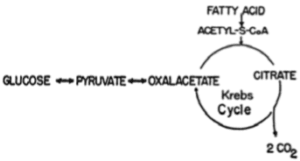
EXCESS PROTEIN TURNS INTO SUGAR
Half truth? It can, but excess protein can also be oxidized for energy.
But converting excess protein to glucose isn’t necessary a bad thing.
Let’s say you eat 100g of excess protein. Compared to fat and carbs, the digestion of protein is very costly. Digestion alone burns 30% of protein. Converting protein to glucose through gluconeogenesis burns an additional 33%.
So if you eat an excess of 100g of protein you potentially get less than 50 grams of glucose. Now the kicker is here – most of it goes towards muscle glycogen.
We have a GLUT4 pathway for glucose uptake in the muscle after resistance training, during which time insulin is not required for processing of glucose.
PROTEIN STOPS FAT BURNING
What is your goal? Fat burning or losing weight? An example, let’s say you eat either your calories needs in protein or in fats.
If you’re losing fat, you’re burning fat – that is a fact. Notice i said fat not weight, as weight can also mean you’re losing muscle mass, something you certainly don’t want.
Protein by itself doesn’t prevent your body from using calories.
If your goal is ketosis go ahead and eat 300+ grams of fat daily. You’ll have ketones high as a skyscraper. You know what you won’t achieve though? Losing weight.
MACROS AND THEIR EFFECT
PROTEIN
It is insulinogenic, this is a fact but it is necessary- as if it wouldnt be, it couldnt be transported into our cells by insulin. The result of that would be death from malnutrition.
While protein does “stop” fat burning since it raises insulin. We have to look at the whole picture. As soon as it’s digested and absorbed, you go straight back into ketosis with no hitch whatsoever.
GLUCOSE
It raises insulin so it “stops” fat burning until it’s absorbed. For how long it depends on a couple of things. The amount ingested, was there exercise prior, or exercise after to lower insulin.
The use of glucose has a legitimate place in TKD or CKD to fill muscle glycogen stores, for the next training session. It is not necessary but it does help.
FRUCTOSE
Doesn’t raise insulin, yet it is still the worst offender. Unlike glucose, fructose is stored in the liver as glycogen. When the liver is full of glycogen – there is no ketosis until it gets depleted.
FAT
Our bodies can make glucose even out of fatty acids if necessary. And on a LC the synthesis of glucose from fatty acid is quite common and quantitatively important.
You could argue that accounts for a similar proportion of gluconeogenesis as any particular amino acid might.
This is the reason you can refill your muscle glycogen stores even without eating carbs. It just takes longer compared to ingesting a larger amount of carbs during a meal.
CASE IN POINT – THE GYMNAST STUDY
By now I think we all know about the famous keto study done on elite level gymnasts. In this study the ELITE level athletes were fed a VLCKD. It was around 22g of carbs per day, so they we’re following a ketogenic diet. The results we’re pretty much astounding.
They gained a non-significant amount of muscle mass, while losing only body fat. It was a big win for the ketogenic diet. It was, as in, until we go look into details.

Although they were only fed 20g carbs per day, they had around 200g of protein a day. At their weight that ends up at around 3g per kg or 1.35g per pound. Their fats were set at 120g per day. Now get your calculator out and you will, see the macro ratio was nowhere the “recommended” for the ketogenic diet.
And yet it didn’t hurt their performance nor fat loss.
KETOGENIC DIET – CONCLUSION
So in the end? Don’t worry about “excess” protein especially if you’re not an epileptic. Even more so if you do resistance training with weights, as it will only help your recovery and overall body-composition.
The only thing that is important is your carb intake. Especially fructose at it will knock you out of ketosis until your liver is depleted of glycogen.
So, don’t be afraid of high protein, rather aim for it. You’ will get better results.
REFERENCES
- Paoli, A., Grimaldi, K., D’Agostino, D., Cenci, L., Moro, T., Bianco, A., & Palma, A. (2012). Ketogenic diet does not affect strength performance in elite artistic gymnasts. Journal of the International Society of Sports Nutrition, 9(1), 34. https://jissn.biomedcentral.com/articles/10.1186/1550-2783-9-34
Leave a Reply
You must be logged in to post a comment.